From 2D to 4D Animation has always been a blend of imagination, timing, design, and technical skill. From hand-drawn 2D frames to advanced 3D environments, every major shift has changed how stories are created. Now, AI is pushing the industry into a new phase: smarter, faster, and more flexible animation workflows.
But this change is not simply about replacing artists with machines. The real value of AI lies in helping animators reduce repetitive work, test ideas faster, and build richer visual experiences. From 2D to 4D animation, AI is making the creative process more intelligent, connected, and responsive.
Quick Answer: How Is AI Changing Animation?
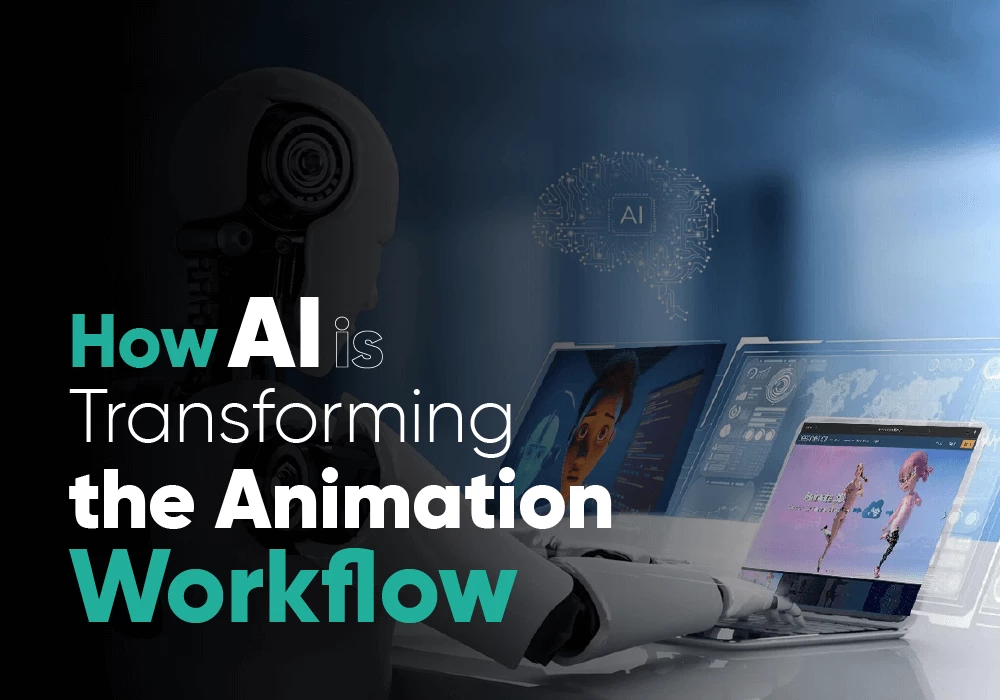
AI is transforming the AI animation workflow by automating time-consuming tasks such as in-betweening, lip-syncing, motion cleanup, asset generation, and procedural movement. It allows creators to move from flat 2D visuals to dynamic 3D and 4D experiences where motion, time, interaction, and data-driven changes become part of the animation process.
What Does “2D to 4D Animation” Really Mean?
To understand the shift, let’s break it down simply.
2D animation works with flat visuals: height and width. Traditional cartoons, explainer videos, character illustrations, and motion graphics often use this style.
3D animation adds depth. Characters and environments can move through realistic spaces with lighting, camera angles, textures, and perspective.
4D animation goes one step further. It adds time-based intelligence, interaction, simulation, or real-world data into the scene. In simple terms, 4D animation is not only about how something looks, but how it changes, reacts, and evolves over time.
This is where AI becomes powerful. AI can help predict motion, generate variations, simulate physics, adjust scenes, and create adaptive animation experiences.
The Traditional Animation Workflow
Before AI, animation production usually followed a long manual process:
- Concept development
- Storyboarding
- Character design
- Asset creation
- Rigging
- Keyframe animation
- In-betweening
- Lighting and rendering
- Editing and post-production
Each stage required specialist skills, careful coordination, and a lot of time. Even a small change in a character movement or scene layout could affect multiple production steps.
This traditional process still matters. Strong storytelling, character emotion, timing, and design sense are still the heart of animation. However, AI is changing how much manual effort is required to reach the final result.
How AI Improves the Animation Workflow
1. Faster Concept and Storyboard Development
AI tools can help creators turn rough ideas into visual directions quickly. Instead of spending days testing multiple scene styles, artists can generate mood boards, frame concepts, and early storyboard drafts in less time.
This does not remove the need for creative direction. Instead, it gives directors, designers, and animators more options at the beginning of the project. They can explore different camera angles, character styles, colour palettes, and scene moods before locking the final direction.
For studios, this makes pre-production more flexible and less stressful.
2. Smarter 2D Animation Production
In 2D animation, one of the most time-consuming tasks is creating smooth transitions between key poses. AI can assist with in-betweening, cleanup, colouring, and motion prediction.
For example, an animator may create the main poses of a character walking, jumping, or turning. AI can help generate the missing frames between those poses. The artist then reviews and adjusts the output to make sure the movement feels natural and expressive.
This makes the workflow faster while keeping artistic control in human hands.
3. AI-Assisted Rigging and Character Movement
Rigging is the process of building a digital skeleton for a character. It allows animators to move arms, legs, faces, clothing, and other body parts in a controlled way.
AI can speed up rigging by identifying body structures, predicting joints, and helping create movement-ready characters. This is especially useful for teams working with many characters or multiple animation styles.
AI also helps clean motion capture data. Instead of manually fixing every small error in captured movement, AI can smooth the animation, remove jitter, and improve realism.
4. Procedural Animation for Complex Scenes
Procedural animation is one of the biggest areas where AI is changing production. Instead of animating every movement by hand, creators can define rules, behaviours, and conditions.
For example:
- A crowd can move naturally through a city street.
- Leaves can react to wind.
- A creature can adjust its steps based on the ground.
- A character’s clothing can respond to movement.
- A game character can react differently depending on player action.
AI makes procedural animation more intelligent because it can learn from motion patterns and generate believable results. This is especially useful for games, virtual production, simulations, and interactive storytelling.
5. From Static Assets to Intelligent Content Creation
The keyword here is intelligent content creation.
In older workflows, assets were often static. A background, character, or prop was designed for a fixed purpose. With AI, assets can become more adaptable.
A single character model can be adjusted for different emotions, outfits, lighting conditions, and camera shots. A background can be extended, recoloured, or turned into a different environment. A voice recording can support facial movement and lip-sync generation.
For example, NVIDIA’s Audio2Face uses AI to generate facial animation from audio input, supporting lip-sync and expressive digital characters. NVIDIA announced open-source access to Audio2Face models and SDK in 2025, showing how AI-driven character animation is becoming more accessible to developers and studios.
The Role of 4D in AI Animation
The idea of 2D to 4D animation is not only about visual depth. It is about creating animation that understands time, motion, context, and change.
In 4D-style workflows, AI can help with:
- Real-time character reactions
- Physics-based motion
- Dynamic camera movement
- Environment changes over time
- Interactive animation for AR, VR, and games
- Data-driven visual storytelling
This opens new possibilities for brands, filmmakers, educators, and game developers. Instead of creating one fixed animation, teams can build flexible animated systems that respond to users, scenes, or live inputs.
Does AI Replace Animators?
No. AI changes the animator’s role, but it does not remove the need for human creativity.
Animation is not just movement. It is acting, emotion, rhythm, storytelling, humour, tension, and style. AI can generate motion, but humans decide whether that motion feels right.
A good animator understands why a character pauses before speaking, why a small facial expression matters, or why exaggerated movement can make a scene funnier. These creative decisions still need human judgement.
The best results come when AI supports artists instead of controlling the full process.
Benefits of AI in Animation Workflow
AI brings several practical benefits to animation teams:
- Faster production timelines
- Lower repetitive workload
- More creative testing
- Better motion consistency
- Easier asset variation
- Improved lip-sync and facial animation
- More scalable content creation
- Greater flexibility for small teams
For businesses, this means animated content can be produced more efficiently. For artists, it means more time can be spent on storytelling, design quality, and creative polish.
Challenges to Consider
AI animation also comes with challenges. Not every AI-generated result is production-ready. Some outputs may look unnatural, inconsistent, or too generic. There are also important questions around copyright, training data, brand safety, and creative ownership.
That is why a responsible AI animation workflow should include human review, clear creative direction, proper asset checks, and quality control at every stage.
AI should be treated as a production assistant, not a final creative authority.
The Future of Animation Is Hybrid
The future of animation will likely be hybrid: part human creativity, part AI assistance, part procedural systems, and part real-time technology.
2D animation will not disappear. 3D animation will keep growing. 4D experiences will become more common in gaming, virtual events, education, product demos, and immersive storytelling.
The studios that benefit most will be the ones that use AI thoughtfully. They will not chase automation for its own sake. They will use AI to make better stories, stronger visuals, and more efficient workflows.
Conclusion
AI is transforming the animation workflow from a slow, linear process into a smarter and more flexible creative system. From 2D sketches to 3D characters and 4D interactive experiences, AI helps artists work faster, test ideas sooner, and create more dynamic content.
The real future of animation is not “AI versus artists.” It is artists using AI to remove friction from the process and bring better ideas to life.
When used with skill, ethics, and creative purpose, AI can make animation more expressive, more accessible, and more powerful than ever.
FAQs
What is an AI animation workflow?
An AI animation workflow is a production process where artificial intelligence helps with tasks such as storyboarding, in-betweening, rigging, motion cleanup, lip-syncing, rendering, and asset creation.
What is 2D to 4D animation?
2D animation uses flat visuals, 3D animation adds depth, and 4D animation includes time, interaction, simulation, or data-driven changes. AI helps connect these stages into a smarter workflow.
What is procedural animation?
Procedural animation uses rules, systems, or algorithms to create movement instead of manually animating every frame. AI improves procedural animation by making motion more realistic and adaptive.
Can AI create full animations?
AI can generate short animations, assist with movement, and speed up production, but human direction is still needed for storytelling, quality control, emotion, and final polish.
Is AI good for 2D animation?
Yes. AI can help with in-betweening, cleanup, colouring, pose generation, and style testing. However, artists still guide the final look and movement.
Will AI replace animators?
AI is more likely to change animation jobs than fully replace animators. Creative judgement, storytelling, acting, timing, and emotional expression still depend heavily on human skill.