Introduction The Next Evolution of Digital Experiences
Digital relationship is quickly moving beyond screens. Industries are currently utilising technologies that are immersive in order to make user experiences more fascinating and participatory.
This transformation is centred on mixed reality apps, which integrate digital and physical spaces to let people interact in real time. From property tours to design modelling, businesses are using spatial technology to change the way people look at and interact with digital content.
What Are Mixed Reality Apps
Mixed fact apps mixture digital elements with the actual world, allowing customers to have interaction with virtual items in a bodily environment. Unlike conventional augmented or virtual truth, MR creates a unbroken integration among each worlds.
Key Capabilities
- Real time environment interaction
- 3D object visualization in physical spaces
- Gesture and voice based controls
- Interactive simulations
- Enhanced spatial awareness
These capabilities make mixed reality apps a powerful tool for industries that rely on visualization and user engagement.
Understanding Spatial Computing Solutions
Spatial computing solutions permit systems to apprehend and engage with the physical global the usage of sensors, cameras, and AI.
This era permits programs to map environment, stumble on surfaces, and location digital items appropriately within actual environments.
Why Spatial Computing Matters
- Improves user immersion
- Enhances accuracy in visualization
- Enables real world interaction with digital assets
- Supports advanced decision making
Spatial computing is the foundation that powers modern mixed reality apps.
Mixed Reality in Real Estate Transforming Property Experiences
Virtual Property Tours Without Physical Visits
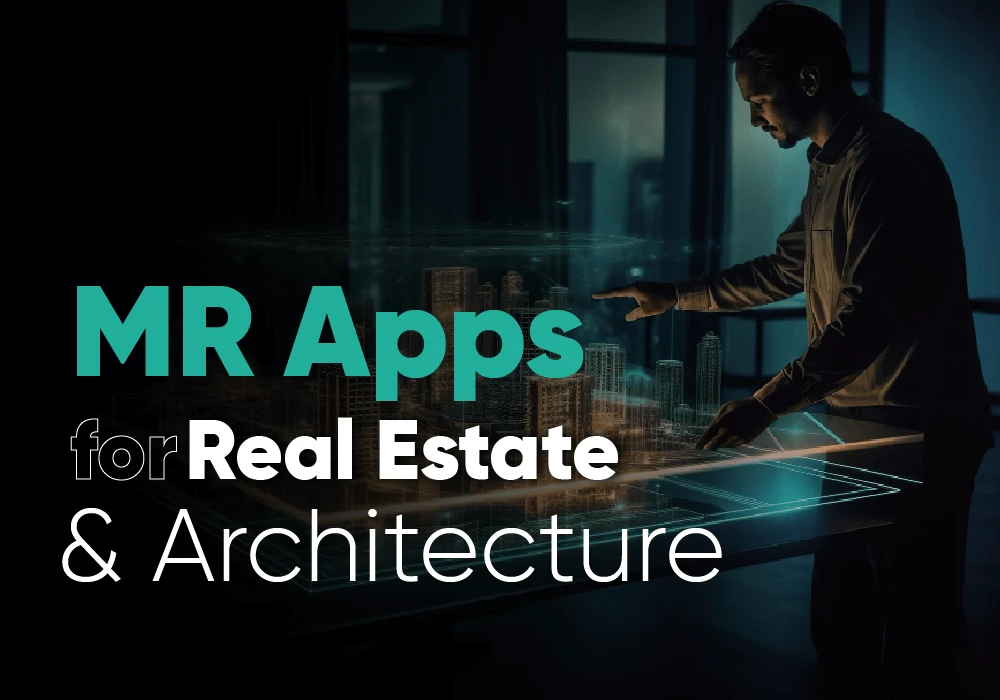
One of the biggest applications of MR for real estate is virtual property exploration. Buyers can walk through properties without being physically present.
Real Time Property Customization
Users can modify interiors, change layouts, and visualize design options instantly.
Faster Decision Making
Interactive experiences help buyers understand spaces better, leading to quicker purchasing decisions.
Improved Client Engagement
Real estate businesses can offer immersive presentations that stand out in a competitive market.
Architectural Visualization Reinvented
Traditional blueprints and 2D designs are no longer enough. Architectural visualization has evolved with mixed reality technology.
Interactive Design Exploration
Architects can present designs in a real world context, allowing clients to explore structures before construction begins.
Real Scale Visualization
Users can view buildings at actual scale, improving spatial understanding.
Design Accuracy and Feedback
Real time interaction enables instant feedback and design adjustments.
Enhanced Collaboration
Teams can work together within the same virtual environment, improving communication and efficiency.
How Mixed Reality Apps Work
Core Technologies Behind MR
- Computer vision
- 3D mapping and spatial tracking
- Artificial intelligence integration
- Sensor based environment detection
System Workflow
- The system scans the physical environment
- Spatial data is processed in real time
- Digital objects are placed within the environment
- Users interact with both real and virtual elements
This process enables seamless experiences powered by advanced spatial computing solutions.
Use Cases Across Industries
Real Estate and Property Development
Immersive property tours and design previews
Architecture and Construction
Advanced architectural visualization and planning
Retail and Ecommerce
Virtual product placement and try before you buy experiences
Education and Training
Interactive learning environments with real world simulations
Challenges in Mixed Reality Development
High Development Costs
Building advanced mixed reality apps requires specialized expertise
Hardware Limitations
Not all users have access to MR compatible devices
Performance Optimization
Ensuring smooth interaction in real time environments is complex
User Adoption
Some users may take time to adapt to immersive technologies
Best Practices for Building Mixed Reality Apps
- Focus on user experience and usability
- Optimize performance for real time interaction
- Use scalable spatial computing solutions
- Ensure cross platform compatibility
- Continuously test in real world environments
If you’re planning to develop immersive apps, our mixed reality app development services can help turn your ideas into reality.
The Future of Mixed Reality and Spatial Computing
The future of mixed reality apps is closely tied to advancements in AI and spatial computing.
What to Expect
- More realistic and immersive environments
- Integration with AI driven automation
- Wider adoption across industries
- Improved hardware capabilities
- Growth of spatial computing ecosystems
As technology evolves, MR will become a standard tool for digital interaction.
Final Thoughts
Mixed fact is redefining how groups present, layout, and interact with virtual content.
By leveraging MR for real estate, advanced architectural visualization, and powerful spatial computing solutions, groups can create immersive studies that force engagement and improve decision making.
Organizations that adopt combined reality apps nowadays might be higher located for the future of digital transformation.
FAQs
What are mixed reality apps
Mixed fact apps integrate real and digital environments, allowing users to engage with digital objects in physical areas
How is MR used in real estate
MR for real estate enables virtual property tours, real time customization, and immersive client experiences
What is architectural visualization in MR
It allows users to explore building designs in real world environments before construction begins
What are spatial computing solutions
Spatial computing answers permit systems to understand and engage with physical environments the usage of advanced technology