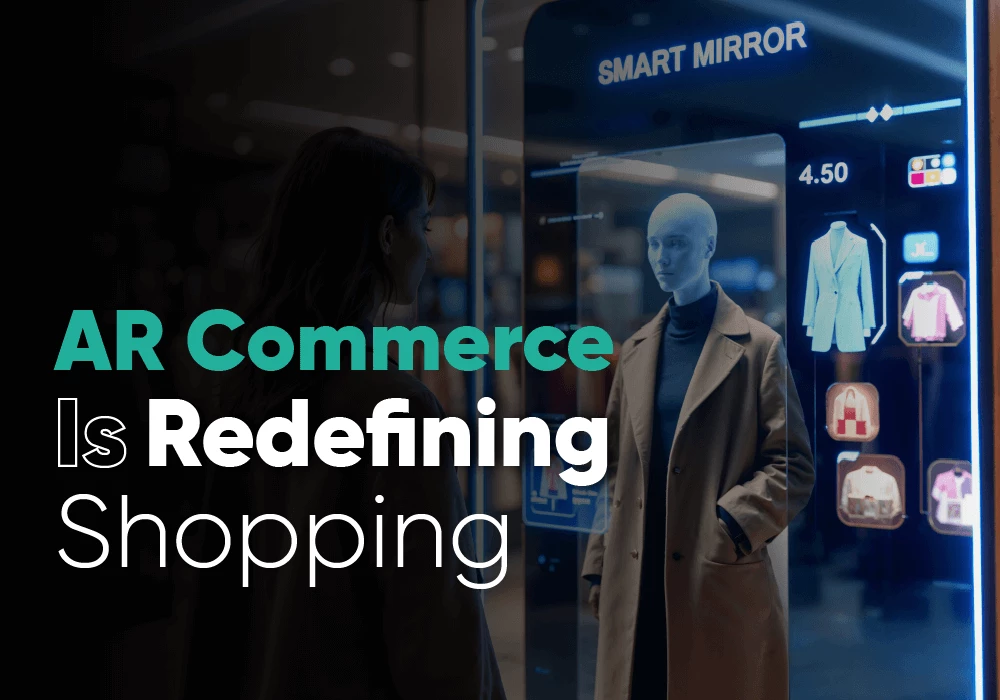
Introduction:
A big change is happening in the world of e-commerce that is changing the way we shop online. Augmented reality (AR) is becoming more popular in the realm of online commerce as technology moves very quickly. The days of static product photographs are numbered as we look ahead to 2026. Augmented reality (AR) commerce is bringing in a new era where customers may virtually, interactively, and fully experience things like never before. In this article, we’ll talk about how AR will soon take the role of product images and change the way people shop online.
What is AR Shopping?
The main idea behind AR commerce is to use augmented reality technology to make purchasing more fun. Customers can also undoubtedly try out the products, see how they will make their homes look, and interact with the object in real time. By 2026, AR enterprise solutions should be a common part of the e-commerce infrastructure. This will make on-line shopping more immersive and interactive.
Traditional online shopping involves consumers observing snapshots and studying the description of products to make a decision. But in AR commerce, users may see the object in real time and in a dynamic way. AR is helping customers have a better idea of what they’re buying before they buy it, whether it’s a piece of furniture in their living room or a jacket on their virtual body.
The Move from Traditional Product Photos to AR
For a long time, product images have been the most important part of internet buying. But as technology gets better and customers’ needs change, pictures alone can’t show everything a product can do. Static photos don’t show how deep and three-dimensional a thing might be in real life. This is where AR product visualization comes in.
By 2026, augmented reality (AR) will have totally taken the place of regular pictures. Instead of the easiest search in 2D images, AR will allow customers to see a 3D model of a product that they can touch and interact with. For example, a consumer can also see how a pair of shoes looks from all perspectives, or a potential customer should undoubtedly walk around a piece of furniture to get a better concept of design and fashion . This immersive experience makes humans feel emotionally connected to the product, which is positioned to create more engagement, and lower return costs Customers can feel a little much much better about their purchases when they can “connect” with the factor in a digital way.
Virtual Product Try-On: A Game Changer
One of the great things about the AR business is that customers can absolutely try things on before they buy. This is especially useful for establishments like style, beauty, and home décor, where how something fits or is perceived can be a considerable part of whether or not to buy it now .
The virtual try-on allows customers to preview how smartwatches fit on their bodies while eliminating the need to personalize them. Makeup studios are already using AR to let customers “try on” many colors and products on their faces so they can choose the right one. AR is helping people visualize how a sofa or light will fit in their area, even when it comes to furniture and home decor. This takes the guesswork out of it.
This new way of making virtual products is already catching on, with companies like IKEA, Gucci and L’Oréal using AR to heighten customer satisfaction As the AR era progresses, more companies will use virtual strive-on features to make purchasing less awkward and more difficult.
The Future of Immersive E-Commerce User Experience
As AR technology gets better, the whole e-commerce user experience (UX) will change. Websites and mobile apps no longer want to use a lot of text and flat product images. Instead, they invite you to buy an experience that looks like a real funnel.
In 2026, we need to be in digital stores with the intention of being where we can discover things in 3D People can navigate digital aisles, select items, see from all angles or talk to digital sellers. Additionally, groups can use augmented true navigation features to help customers find specific additions in virtual inventory, such as a new get dressed or even a new couch.
The checkout process will also be part of this immersive experience. Imagine being able to try on a product for sure, walk around a digital store, and thoroughly try it on thanks to amazing AR connectivity. All this will make online shopping more fun and exciting for customers to enjoy.
What to Expect in AR Commerce 2026
The use of AR in online shopping will keep growing at an amazing rate until 2026. AR will not only take the place of product photographs, but it will also be a key part of the whole customer journey. Augmented facts (AR) will have an impact on every part of the process, from circular searches to creating layouts to getting items purchased
For instance, AR can additionally track customers where their purchases have arrived in real-time, with augmented truth snapshots showing items moving from the warehouse to their doorstep and even, google and other AR-powered engines push upwards to users using scanning themes around or discover item orders to encourage
Why Businesses Should Use AR Commerce
There is no doubt that AR is the destiny of online shopping. Businesses need to use AR to compete because more customers need to buy stories that can be immersive and tasteful. Here’s why choosing AR trading is essential if you want to succeed within eternity:
More engaging: AR meetings are interactive, making them extra exciting than regular visuals.
Improved Conversions :
Virtual campaigns and product visualizations can help shoppers experience extra positivity around their purchase, which can lead to extended conversions.
Customer happiness :
Businesses can improve customer happiness and loyalty by giving them more customized shopping pleasure.
Low return rates :
Customers are much less likely to return items if they can interact with them online because they don’t have unreasonable expectations.
To stay ahead of the curve, you need to incorporate the AR era into your eCommerce strategy when it happens to be extra widespread. The world of clean procurement is set to shift gears as we head towards 2026.
Augmented reality will take the place of product images, giving customers more personalized, engaging, and immersive experiences. AR will change the way we shop in a big manner, from virtual product try-ons to immersive online stores. Businesses need to use AR commerce services in order to stay competitive in the digital economy, which is always evolving. So, get ready for the future of shopping with AR now!
AR Commerce 2026 | Frequently Asked Questions
What is AR commerce, and how does it work?
The AR business uses augmented facts (AR) technology in online shopping. It allows humans to see things in 3-D, interact with them in real time, or even actually try them on before buying. By 2026, AR companies are expected to be a regular part of on-line purchases, but still enjoy altering images of products, making them more immersive
How does shopping in augmented reality make buying things online better?
Augmented Truth Shopping is more enjoyable by letting the consumer actually try on products, see what things look like in their home, and look at things from a different perspective. This makes things much less confusing and helps consumers make better choices about what to transact.
Which businesses will profit the most from AR commerce?
AR commerce will have a big effect on many industries, but it will be especially big in fashion, furniture, cosmetics, and home decor. For instance, fashion shops can let people virtually try on clothes, beauty companies can let people virtually test makeup, and furniture stores like IKEA already use AR to show buyers how furniture would look in their homes.
What are virtual product try-ons, and why do they matter?
Customers may see how clothes, makeup, or glasses will appear on them without having to try them on in person via virtual product try-ons. This technology makes buying online better by giving customers a tailored and realistic view of the goods. This lowers the chance of returns and increases consumer happiness.
What will AR do to the user experience of e-commerce in the future?
As AR technology gets better, e-commerce websites and apps will become more engaging and real. Customers will be able to shop in virtual stores, try on clothes in real time, and talk to virtual salespeople by 2026. This will make buying more entertaining and interesting. AR will be an important element of the customer journey from finding a product to checking out.
What are the advantages of using AR commerce for businesses?
Companies that use AR commerce will see more people interacting with their products, more sales, and fewer returns. Brands can develop closer relationships with customers, make them happier with their products, and ultimately increase sales by giving them an interactive shopping experience. Businesses who use AR to enhance their products will stand out from their competition and stay ahead in the digital world.
Is it costly for small firms to use AR commerce?
AR technology has gotten easier to get in recent years, but small firms may still have to spend a lot of money to use AR commerce solutions.
However, as AR tools and platforms get better, the cost of putting them into use should go down over time. Starting with cheap AR tools like virtual product try-ons or 3D visualizations can be a fantastic way for small firms to get into AR commerce without spending a lot of money.
What can companies do right now to get ready for AR commerce in 2026?
Businesses should first look at the AR tools and platforms that are out there that can add AR functionality to their apps or e-commerce sites. Businesses may also be ready for the AR-driven future of e-commerce by spending money on AR training, working with AR experts, and making sure their product graphics are immersive and of high quality.