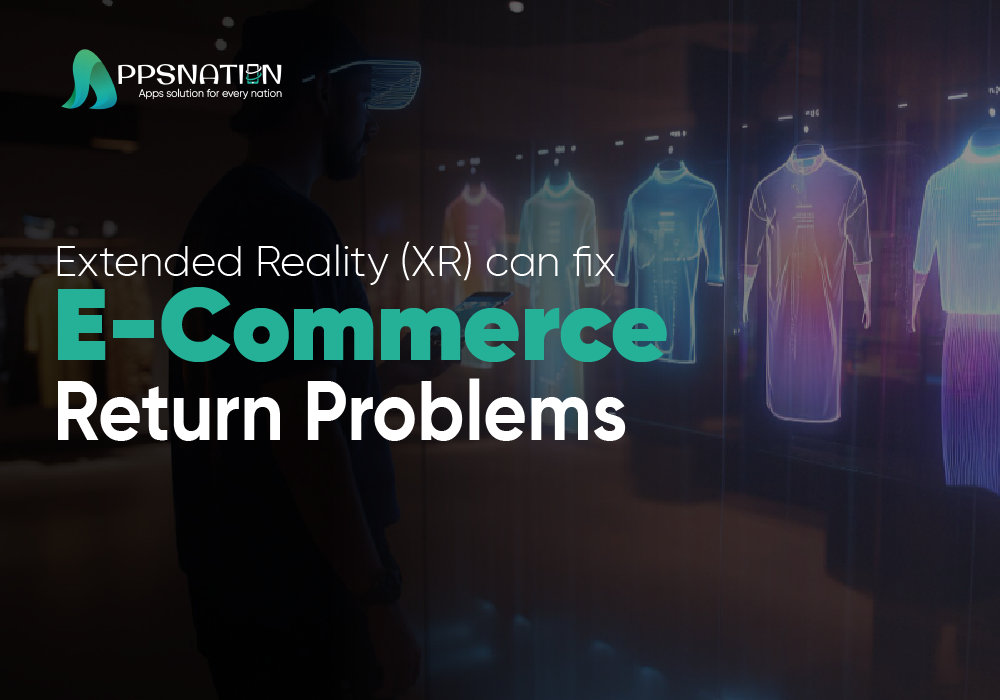
The high returns are among the most significant points of pain in e-commerce, which seeps profits and erodes customer trust. The majority of returns are caused by such a straightforward reason as customers do not see, touch, or experience goods before purchasing. That is where the Extended Reality (XR) that is Augmented, Virtual, and Mixed Reality comes in as a game changer. XR allows consumers to experience products in a realistic online environment.
it is virtually trying on clothes or visualizing furniture in their personal room. This experience is a highly realistic and data-driven approach to shopping that aligns expectation with reality, significantly lowering product mismatch and expensive backorders. Online retailers who implement XR are able to optimize logistics losses as well as increase customer satisfaction and sustainability. The XR will not only be a somewhat innovative product in the competitive retail environment of 2025, but it will also be the solution to smarter.
Getting rid of Guesswork: The Magic of Virtual Try-On and Sizing
One of the main sources of returns, primarily in fashion, is the long-standing issue of fit and sizing error. VTO, which is an AR-driven body scanning solution, enables consumers to visualize how clothes fit and appear on a 3D representation of an avatar based on their real dimensions. This feature goes beyond the use of generic size charts and offers individual fit suggestions that greatly boost the confidence of the buyer. Through the ability of users to virtually test on glasses, shoes, or clothes, retailers will be able to know whether the item would be as expected even before it leaves the warehouse, essentially addressing the issue of returns at their source.
High-Fidelity Visualization: Making the Digital Physical
In the case of products such as home goods and furniture, returns are usually instigated by products that look different in the real environment of a customer than on the internet. The solution to this is found in XR, which provides interactive visualization tools of a high quality, which are mostly AR apps. Using their smartphone camera, shoppers can immediately superimpose a 3D version of a sofa or a rug on their actual living room. This contextual preview in real-time enables the customer to know with no doubts color, scale, and aesthetics fit, and such large-item returns that are costly and inconvenient are a rarity.
The Hidden Cost: The E-commerce Return Epidemic Quantification
The returns of e-commerce are not a minor inconvenience but a drain on the retail resources to the tune of multi-billion dollars, which is commonly referred to as the reverse logistics crisis. In addition to the cost of money back, retailers also pay the cost of shipping the product back, their inspection, repackaging and markdown of inventory of used or damaged products. The XR technology implementation is a direct investment in preventing profits since any avoided returns are converted into direct savings on both labor costs, transportation cost, and carrying costs of inventory. XR reduces the funds back to a controllable figure, then.
Increasing Consumer Confidence: Lessening Post-Purchase Dissonance
One of the primary causes to instigate a return is post-purchase dissonance, the emotion of regret or doubt following a purchase. XR helps to overcome this psychological phenomenon by making the surety of products to the maximum during the shopping stage. Having the ability to communicate with a product at an enormous realistic level, ensuring it is suitable to the consumer, the emotional investment in making a purchase has grown to a new level. This trust is essential, as it will be certain that the expectation of the customer corresponds to the reality of the given item, and the whole transaction will become smoother, and the main psychological impulse to a refund would be eliminated.
Beyond Profit: The Environmental Implication of Sustainable XR Shopping
The epidemiological cost of the re-return pollution to the environment is large and includes carbon emissions of the two-way shipping, superfluous packaging material and landfill share of the returned goods. Sustainable research XR can be considered an important solution to the problem of retail, which directly reduces this effect by significantly reducing the necessity of transportation. The technology reduces fuel usage and the emissions, encouraging a more circular economy by eliminating returns. Retailers that have embraced XR are not only enhancing their bottom line but they are also investing in a more responsible retail model.
Browsing to Buying: as the Ultimate Conversion Tool
It is extremely efficient to incorporate the XR capabilities, including the AR product placement to transfer the experience of a casual customer into the dedicated buyer mode. The expertise of XR makes the usual nature of e-commerce more interactive and engaging, and thus, more memorable and sticky. Customers who interact with XR technologies tend to feel more emotional towards the product and thus much more inclined to finalize the purchase than those who use only inanimate paintings. In this way, XR serves as a two-fold advantage both in that it increases the conversion rates in the short term and, at the same time, reduces the likelihood of the sale being canceled in the future.
Technology Toolkit AR, VR, and MR Retail
Extended Reality is a term that can be applied to a series of individual technologies that provide various retail solutions to the returns issue. Augmented Reality (AR) is very available and it involves smartphone cameras to visualize in real-time (e.g. putting on a watch). The Virtual Reality (VR) provides 3D showrooms to examine the product in a more in-depth sense. Lastly, Mixed Reality (MR) makes a combination of the two to interact with a level of high customability. These particular technological tools can be chosen and implemented by retailers to meet the informational requirements of their product lines that are specific.
Measuring Success: The Key Metrics to Indicate the Reduced Return Rates through XR
The XR implementation is not a success story; it can be measured with the help of definite retail metrics. Some of the key performance indicators include the Return Rate, the Net Promoter Score (NPS), and Customer Lifetime Value (CLV) which exhibit a significant improvement post-XR integration. Retailers regularly record a quantifiable reduction in returns of products which have employed AR visualization by double digit percentages, relative to conventional listings. This is evidenced by data-driven evidence to prove that XR is a highly effective, operational solution, which does not remain in the realm of the novelty but has developed into a proven strategy of retail efficiency.
Conclusion: XR is the Future of Sustainable E-commerce
The most serious threat to future profitability and environmental sustainability of e-commerce is the unremitting case of the return epidemic. The solution to this is the Extended Reality (XR) that will take the online experience to the next stage of active purchasing and not subsidizing. Through high-end Virtual Try-Ons and AR images, retailers reduce the guesswork that leads to a misfit between expectation and reality to the maximum. The adoption of XR is not an option anymore, but a tactical requirement: it decreases expensive reverse logistics directly, carbon footprint is minimized, and the consumer trust is established more profoundly. The investment in this technology changes the existing broken circle of returns into a clear solution, sustainable, and very profitable digital retail model.
FAQs
How can extended reality be applied in e-commerce?
Extended Reality (XR) is another solution to the process of ecommerce, which introduces immersive experiences that serve as the bridge between the digital and the physical worlds. Having a variety of outcomes, such as the improvement of customer experience and growth of sales and efficiency, XR is certainly shifting the standards of online shopping.
What will become of e-commerce?
Hyper-personalization with AI, immersive experience with AR, and new sales channels such as social and live commerce are the future of e-commerce. Such trends as AI-enhanced customer care and supply chain predictive analytics will be sought after, whereas emphasis on ethical branding, sustainability, and domestic markets is going to influence consumer confidence. Besides, new technological developments such as headless e-commerce and voice search will lead to more convenient and flexible shopping experiences.
Are retailers making a profit in 2025 through ecommerce?
Indeed, eCommerce is still very lucrative in 2025, as the international online sales are expected to reach over 7 trillion. Profitability is based on business model, niche choice, operation effectiveness and marketing approach.
What is one of the biggest issues with e-commerce?
Cybersecurity threats. Increased cyber attacks are one of the largest threats that an online business can experience. Ecommerce sites are also prone to online skimming, financial fraud, and other malices that lead to heavy losses.