Introduction | How VR is Changing the Game
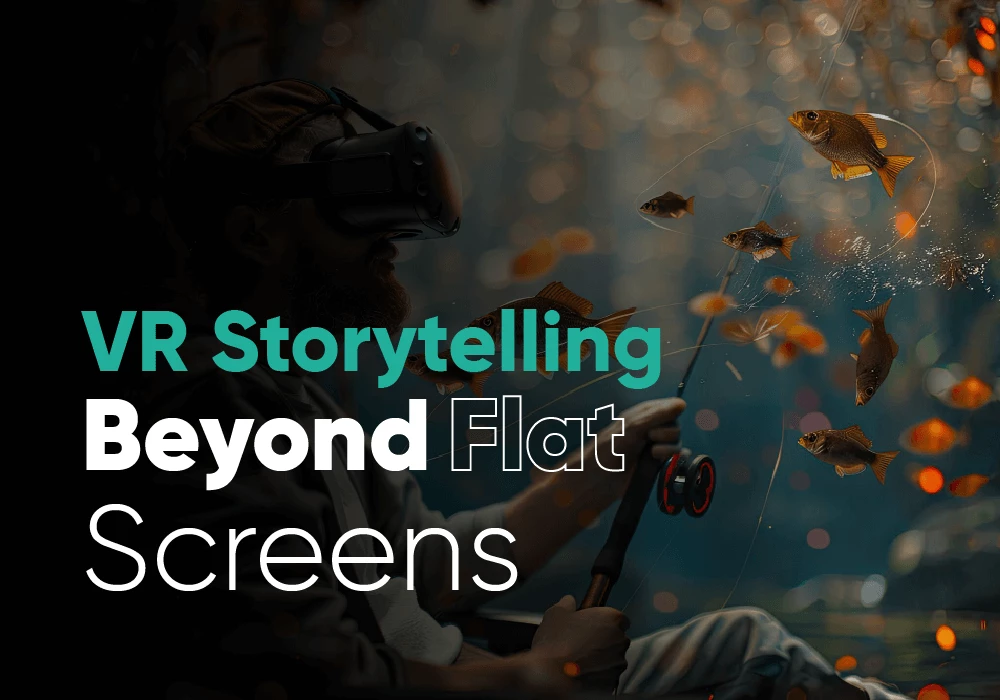
Do you remember when companies just used flat screens to express their stories? Those days are going away quickly. VR is not entirely for people who play video games. It changes the way manufacturers talk to their customers. VR storytelling takes stories from simply watching to actively collaborating by placing visitors in a fully interactive environment.
VR gives you a place to be creative that flat displays can’t equal, whether you’re introducing a new product or trying to get people to stick with your brand.
What Sets VR Storytelling Apart
VR is not like other forms of media because it is what we humans can do internally to your story. They certainly don’t see it; They also communicate, you see, and even change history. Think of it like walking through a museum of brands, with every word, sight, and angle reinforcing who you are.
Some of the main benefits are:
- Immersion: Being completely involved with all of your senses helps messages stick.
- Emotional connection: Users see tales personally, which makes them more empathetic and helps them remember the brand.
- Interactivity: Game-like features make people want to participate and keep them interested for longer.
- Insights from data: Keep track of how users engage with your campaigns to make them better in the future.
When you use VR in your marketing, your brand goes from being a storyteller to an experience designer.
How Brands Are Using VR in a Smart Way
Virtual Showrooms
Retailers and firms that make items are increasingly creating VR showrooms where people can look at things in 3D. Picture being able to go through a virtual furniture collection and put things in your own living room without leaving your house.
For companies who want to create VR-enabled applications, check out your Mobile App Development services.
Campaigns That Are Fun to Do
With VR, customers may engage with goods or brand mascots in campaigns. For example, car companies have developed VR test drives that let people get a feel for the car without going to a showroom.
Highlight UI/UX Design services that make VR experiences more immersive and easy to use.
Experiences at Events
VR can make every event, from product launches to trade shows, into a memorable experience. People may digitally check out new product lines, go to seminars, or take part in brand challenges.
Suggest your AI & AR technologies to create smart, interactive spaces.
Brand Tips for Making VR Stories
- Know your audience: VR is most effective when the material is tailored to them. Think about what your users want to see or do.
- Don’t worry about the technology: VR is great, but if your story isn’t good, the experience won’t be good either. Make the plot arc apparent.
- Use haptics and spatial audio: Make sounds and sensations more lifelike.
- Make interactions easy to understand: Users shouldn’t require a guide to go around your universe.
- Test, change, and improve: VR storytelling is still in the works. Get feedback to get more people involved.
Use Digital Marketing services to help your VR campaigns get more attention.
VR Storytelling in a Local Setting
In cities like Lahore, Karachi, and Islamabad, more and more brands in Pakistan are using VR. You can get more people to connect with your content and convert by making it more relevant to their culture, language, and surroundings.
Connect with your Web Development services to help marketers create VR landing pages that are specific to their area.
How to Measure the Effect of VR Campaigns
Storytelling in VR is fun, but how do you know it works? Some things to keep note of are:
- Time spent in the virtual world
- Rates of interaction with objects or characteristics
- Getting people emotionally involved via surveys or analytics
- Sales increase and conversion rates
Use analytics dashboards with VR campaigns to get real-time information. Appsnation can help with this by using AI-powered analytics tools.
Questions That Are Often Asked
Is virtual reality too pricey for small businesses?
VR may be an expense, but there are a lot of options, from expensive equipment to web-based VR that works on smartphones. Start small, try things out, and then grow slowly.
Can VR be useful for companies who provide services?
Yes, of course. Hotels, hospitals, and schools may utilize VR to provide virtual tours, show off their services, and tell stories in a way that makes you feel like you’re there.
Do users require specific hardware?
Headsets are needed for advanced experiences, while mobile devices can handle 360-degree films and WebVR experiences.
How can I use VR in my present marketing?
First, figure out which parts of your brand narrative are the most engaging. Then, work with developers and designers to create content that works well in VR.
Go Beyond Flat Screens
In the future, brand stories will be immersive, engaging, and easy to remember. Your business can utilize VR to create stories that people experience instead than simply watch. There are so many things you can do, from virtual showrooms to interactive advertising.
We help marketers use VR, AR, and AI to create experiences that reach beyond the screen at Appsnation. Check out all of our services now to make your brand narrative one that people will never forget.